BRAND FUEL
SEO vs Google Ads: Which Is Better for Your Business?
Every business owner wants more website traffic, higher-quality leads, and better sales conversion. When deciding where to invest your marketing budget, you’ll inevitably run into the debate: SEO vs. Google Ads.
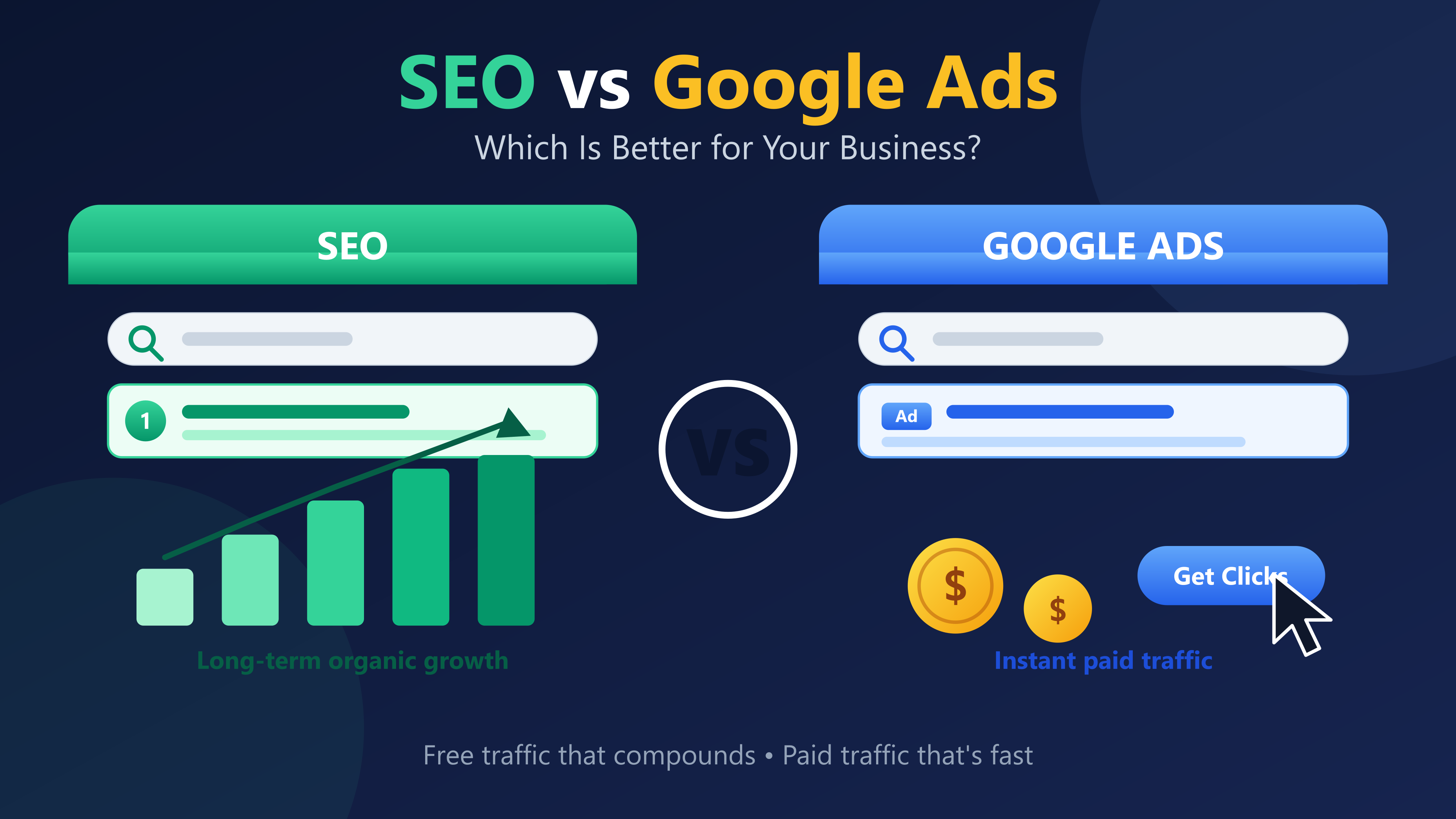
Both channels dominate search engine marketing, but they operate on completely different models. Should you focus on long-term organic search rankings or pay for instant visibility with Google Ads? At Brand Fuel, we break down how both strategies work, their pros and cons, and how to choose the right strategy to fuel your business growth.
1. What Is Search Engine Optimization (SEO)?
Search Engine Optimization (SEO) is the process of optimizing your website to rank organically on search engine results pages (SERPs) like Google. When potential customers search for terms related to your products or services, high SEO visibility ensures your business shows up near the top without paying for individual ad clicks.
Core Components of SEO
- On-Page SEO: Content optimization, target keyword placement, meta tags, and internal link structure.
- Technical SEO: Site speed, mobile-friendliness, crawlability, and schema markup.
- Off-Page SEO: Backlink building, digital PR, and domain authority.
Key Advantages of SEO
- Sustainable, Long-Term Traffic: Unlike ads that turn off when your budget ends, organic rankings continue to drive steady traffic over time.
- Higher Conversion Trust: Users often trust organic search listings more than paid ad placement.
- Cost-Effective Scalability: You pay no cost-per-click (CPC) for organic traffic, making long-term acquisition costs lower.
2. What Are Google Ads (PPC)?
Google Ads is a pay-per-click (PPC) advertising platform that allows businesses to bid on specific keywords. Your ads appear above organic listings, on Google Shopping, across YouTube, and within the Google Display Network.
How Google Ads Works
- Target Intent-Driven Keywords: Bid on exact terms potential buyers search when looking to purchase.
- Set Daily Budgets: Control total spending with daily caps and maximum bid limits.
- Pay Per Performance: You only pay when a user actually clicks on your ad link.
Key Advantages of Google Ads
- Instant Speed to Market: Launch a campaign today and receive targeted traffic within hours.
- Precise Laser Targeting: Segment leads by search intent, location, demographics, and device.
- Measurable ROI Tracking: Directly track conversions, customer acquisition cost (CAC), and ad spend return.
3. Direct Comparison: SEO vs. Google Ads
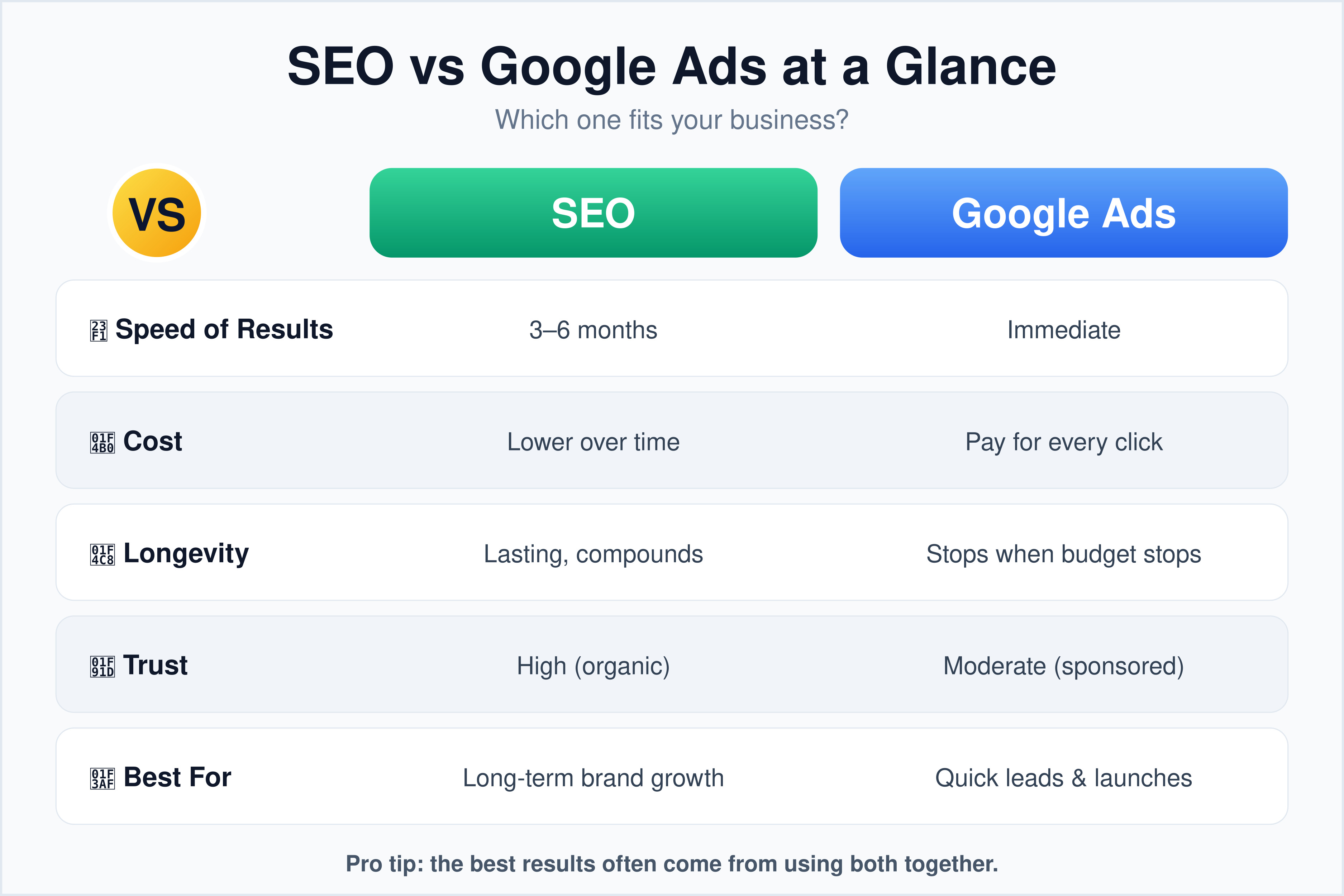
| Feature | Search Engine Optimization (SEO) | Google Ads (PPC) |
|---|---|---|
| Speed of Results | Slow to medium (3 to 6 months) | Instant (Immediate traffic) |
| Cost Model | Upfront content & optimization investment | Pay-per-click (Continuous budget required) |
| Traffic Stability | High (Durable long-term organic traffic) | Temporary (Stops when ad budget ends) |
| Trust & Click Rate | High organic trust & authority | High commercial intent clicks |
| Targeting Flexibility | Broad organic keyword coverage | Specific audience, location & device targeting |
4. How to Decide: Which Strategy Fits Your Brand?
Choose SEO If:
- You want long-term cost efficiency: You want to lower customer acquisition costs over time.
- You’re building brand authority: You want to establish industry thought leadership and dominate informational queries.
- You have a long runway: You can afford to invest resources upfront for exponential compound growth over 6–12 months.
Choose Google Ads If:
- You need leads immediately: You are launching a new product, seasonal promotion, or event.
- You target high-intent buyers: You offer high-value services where immediate conversion offsets ad click costs.
-
You want to test new offers: PPC allows quick A/B testing of messaging and landing pages before committing to full SEO campaigns.
5. The Hybrid Approach: Combining SEO & Google Ads
Why choose one when you can combine both? The most aggressive digital growth campaigns leverage a unified search strategy:
- Use Google Ads for Immediate Revenue: Capture bottom-of-funnel conversions right away using PPC target keywords.
- Mine PPC Data for SEO Strategy: Identify high-converting ad keywords and create optimized organic content around them.
- Dominate SERP Real Estate: Appearing in both paid ad slots and top organic positions doubles brand visibility and trust.
Ready to Fuel Your Brand's Growth?
Choosing between SEO and Google Ads depends on your business goals, budget timeline, and market competition. At Brand Fuel, we build custom digital marketing strategies tailored to your exact growth objectives. Whether you need an aggressive PPC revenue engine, high-ranking SEO content campaigns, or a complete digital brand strategy, our team is here to help.
👉 Contact Brand Fuel Today to schedule your strategy call and accelerate your search visibility!