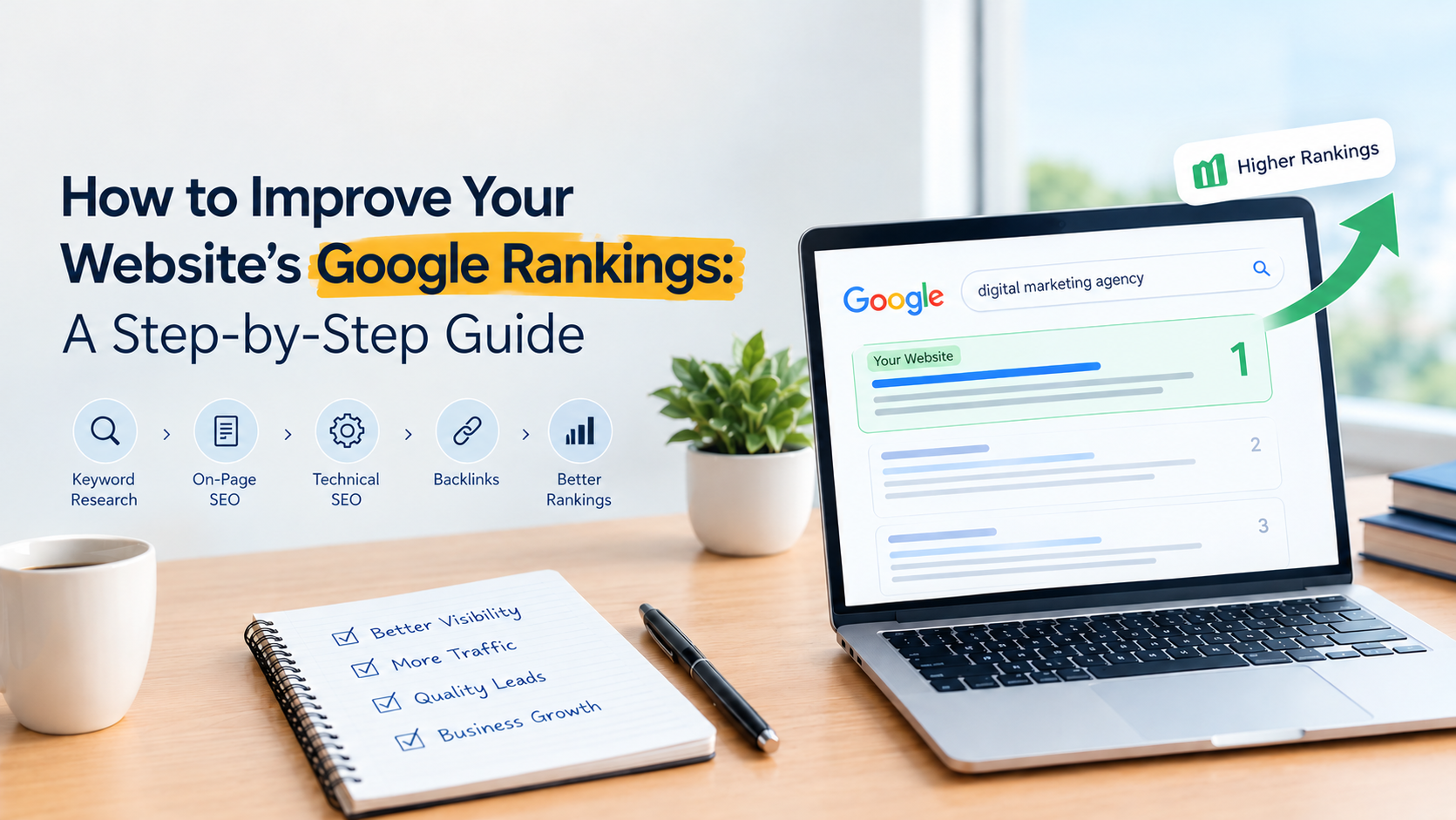
How to Improve Your Website's Google Rankings: A Step-by-Step Guide
Every business wants to appear on the first page of Google when potential customers search for its products or services. However, achieving better search visibility requires more than simply having a website. You need a well-planned SEO strategy, helpful content, a technically sound website, and a consistent approach to optimization.
If your website is not getting enough organic traffic, leads, or enquiries, it may be time to improve your search engine optimization (SEO). In this guide, we explain practical steps businesses can take to improve Google rankings, attract relevant visitors, and generate more leads.
What Is Google Ranking and Why Does It Matter?
Google ranking refers to the position a webpage appears in Google's search results for a particular search query. A strong search presence can help your business reach people looking for your products or services, increase brand awareness, and create opportunities to convert visitors into customers.
Increase organic website traffic without paying for every click.
Reach potential customers actively searching for your services.
Build credibility and trust with your target audience.
Generate relevant leads and business enquiries.
Step-by-Step Guide to Improve Your Website's Google Rankings
1. Conduct Keyword Research
Identify the terms your audience searches for and choose keywords relevant to your services and business goals. Use tools such as Google Keyword Planner and Google Search Console to discover search queries, review intent, and assess competition. Consider specific long-tail phrases, and assign related keywords to the most relevant pages.
2. Optimize On-Page SEO
Write a unique, descriptive title tag and meta description for each important page. Use a clear H1 heading and logical H2/H3 subheadings. Include your primary keyword naturally in relevant places, optimize images with descriptive alt text when appropriate, and avoid keyword stuffing.
3. Create Helpful, High-Quality Content
Publish original content that answers real questions and satisfies search intent. Use clear paragraphs, examples, useful visuals, and practical insights. For a digital marketing agency, relevant topics include technical SEO, local SEO, SEO vs Google Ads, and social media marketing strategies.
4. Improve Technical SEO
Make sure important pages can be crawled and indexed. Check website speed, mobile usability, HTTPS, broken links, canonical tags, noindex directives, and your XML sitemap. Google PageSpeed Insights and Google Search Console can help you identify issues.
5. Earn Relevant Backlinks
Backlinks from relevant websites can help people discover your content and may support search visibility. Create useful resources, contribute expert insights to relevant publications, build genuine industry relationships, and avoid paid or manipulative link schemes intended to influence rankings.
6. Optimize for Local SEO
If your business serves specific locations, keep your eligible Google Business Profile accurate, maintain consistent business details, collect genuine customer reviews, and create genuinely useful location-specific content. Avoid publishing near-identical pages for many locations.
7. Improve Internal Linking
Connect related blog posts and service pages with natural, descriptive anchor text. Internal links help visitors discover useful information and help search engines understand how pages relate to each other. Fix broken links and make important pages easy to reach.
8. Improve User Experience
Make navigation clear, keep text readable, ensure forms and buttons work, and check that your website functions well on mobile devices. Focus on helping visitors find information and take the next step rather than relying on design changes as a guaranteed ranking tactic.
9. Track SEO Performance
Use Google Search Console to monitor impressions, clicks, click-through rate, average position, search queries, and indexing issues. Use website analytics to measure meaningful outcomes such as enquiries, calls, and purchases. Review trends and make changes based on evidence.
10. Update Existing Content
Review important pages regularly. Refresh outdated information, answer unanswered questions, improve internal links, fix broken links, and remove unnecessary repetition. Update content when you can make a meaningful improvement, not simply to change its date.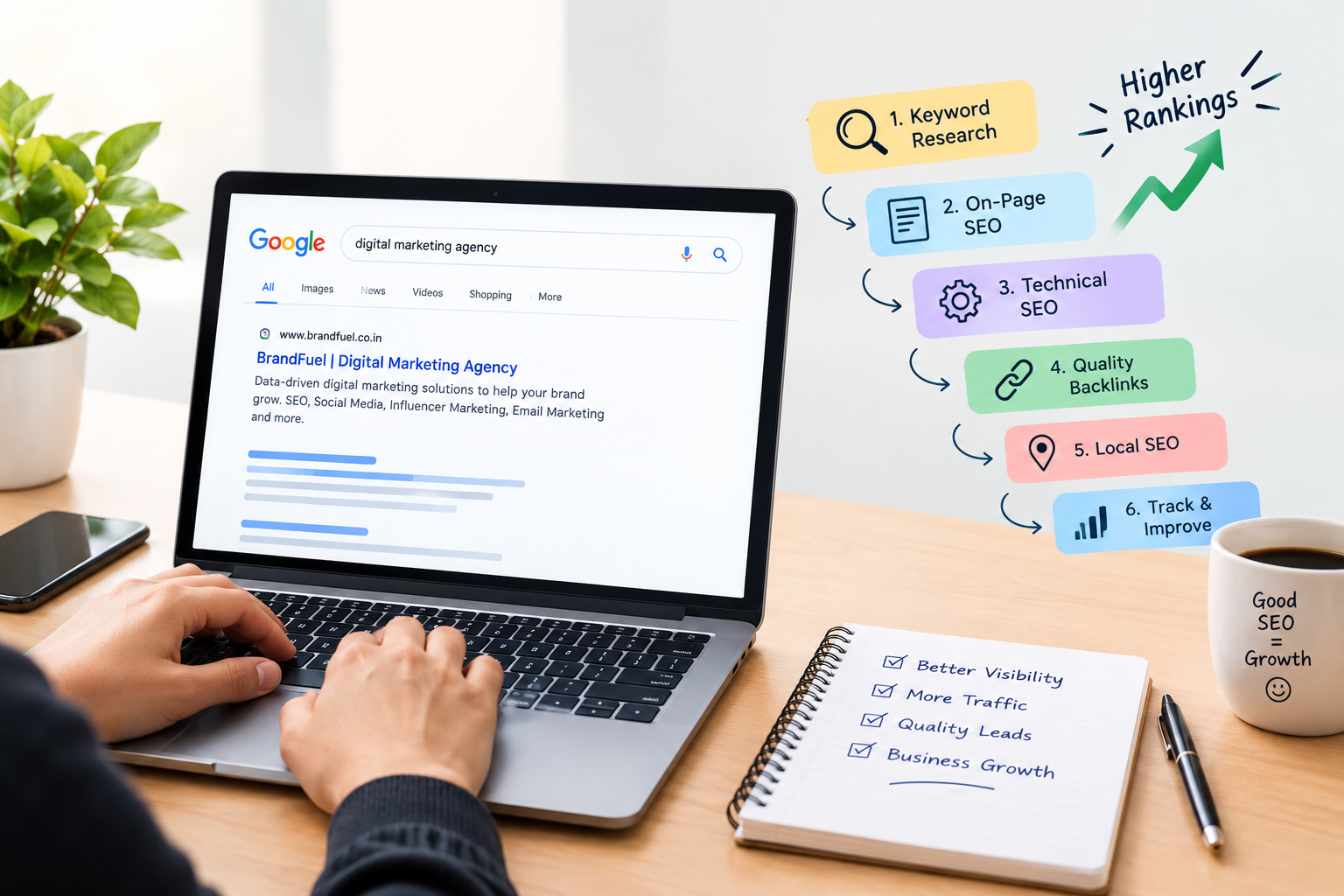
Common SEO Mistakes to Avoid
Keyword stuffing and writing for search engines instead of people.
Copying content or publishing multiple pages with little meaningful difference.
Ignoring technical problems that prevent pages from being accessed or indexed.
Building spammy backlinks or using manipulative link schemes.
Expecting immediate results or guaranteed first-page rankings.
How Long Does It Take to Improve Google Rankings?
There is no fixed timeline. Results depend on your website's current condition, competition, content quality, technical issues, and consistency of optimization. Some changes may be reflected within weeks, while more competitive improvements can take several months or longer. Monitor performance over time and set realistic goals.
Why Invest in Professional SEO Services?
SEO involves keyword research, content planning, technical improvements, internal linking, backlink analysis, and performance monitoring. Professional SEO support can help businesses identify opportunities, prioritize work, and align optimization with business objectives.
Conclusion
Improving your website's Google rankings requires relevant keyword research, helpful content, effective on-page SEO, technical optimization, quality backlinks, and regular performance analysis. Focus on making your website easy to discover, understand, navigate, and trust. With a consistent, data-driven approach, your business can work toward stronger organic visibility, more relevant traffic, and better opportunities to generate leads.
Want to improve your website's visibility on Google?
BrandFuel can help your business develop a digital marketing strategy aligned with your growth objectives. Explore our services at https://brandfuel.co.in/ and get in touch to discuss your marketing goals.
Frequently Asked Questions
How can I improve my website's Google rankings?
Start with keyword research, helpful content, on-page optimization, technical SEO, relevant backlinks, and regular monitoring in Google Search Console.
Can I improve Google rankings without paid advertising?
Yes. SEO focuses on organic search visibility, so you do not pay Google for each organic click. However, SEO still requires time and may require a budget for content, tools, or professional support.
Is keyword research still important?
Yes. Keyword research helps you understand what your audience is searching for and organize content around relevant topics. Use keywords naturally and focus on answering users' questions.
How do I know if my SEO strategy is working?
Monitor clicks, impressions, click-through rate, search queries, average position, and indexing in Google Search Console. Also track enquiries, calls, purchases, and other meaningful conversions.