What Is a Modern Marketing Funnel and Why Does It Matter?
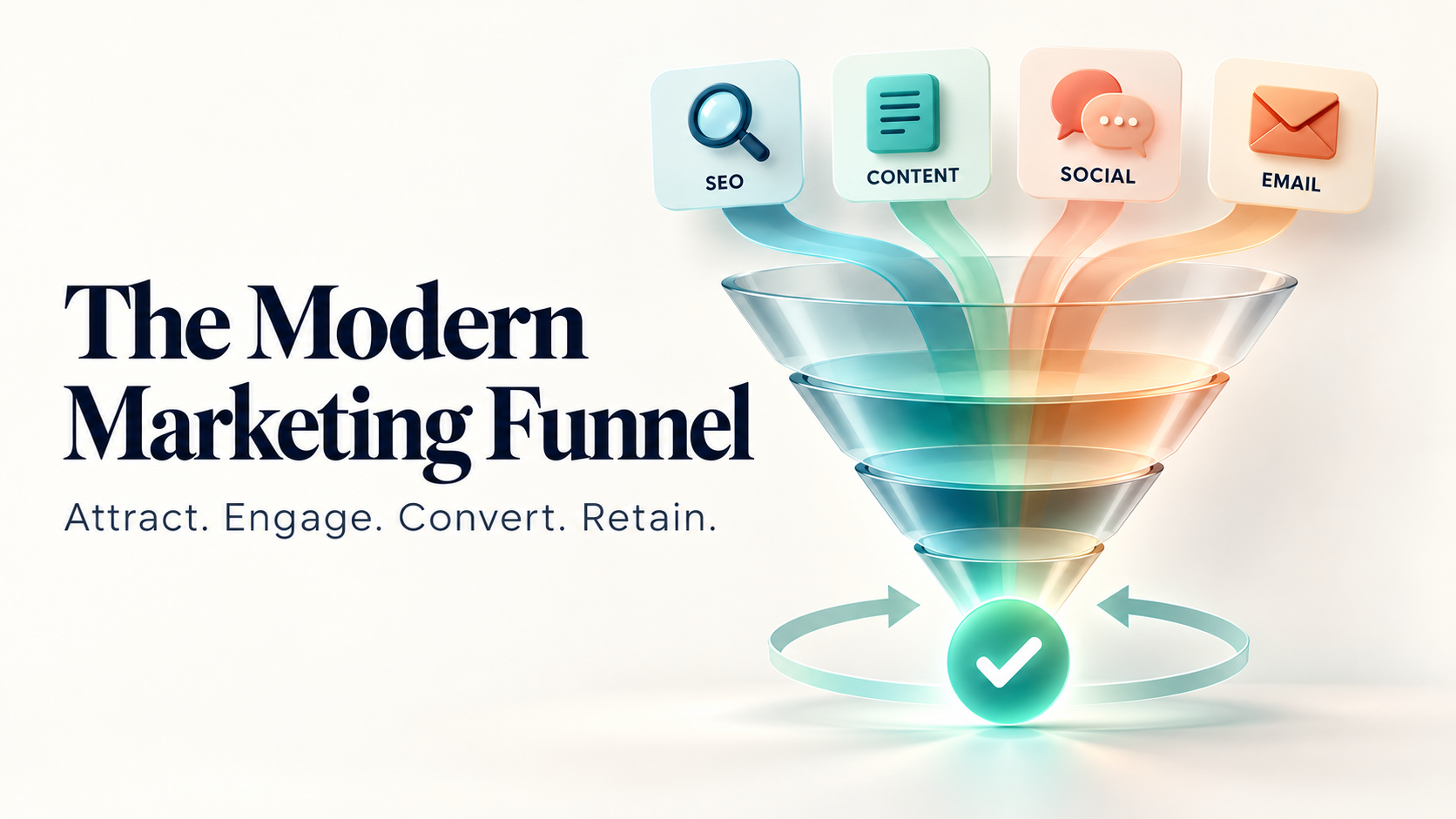
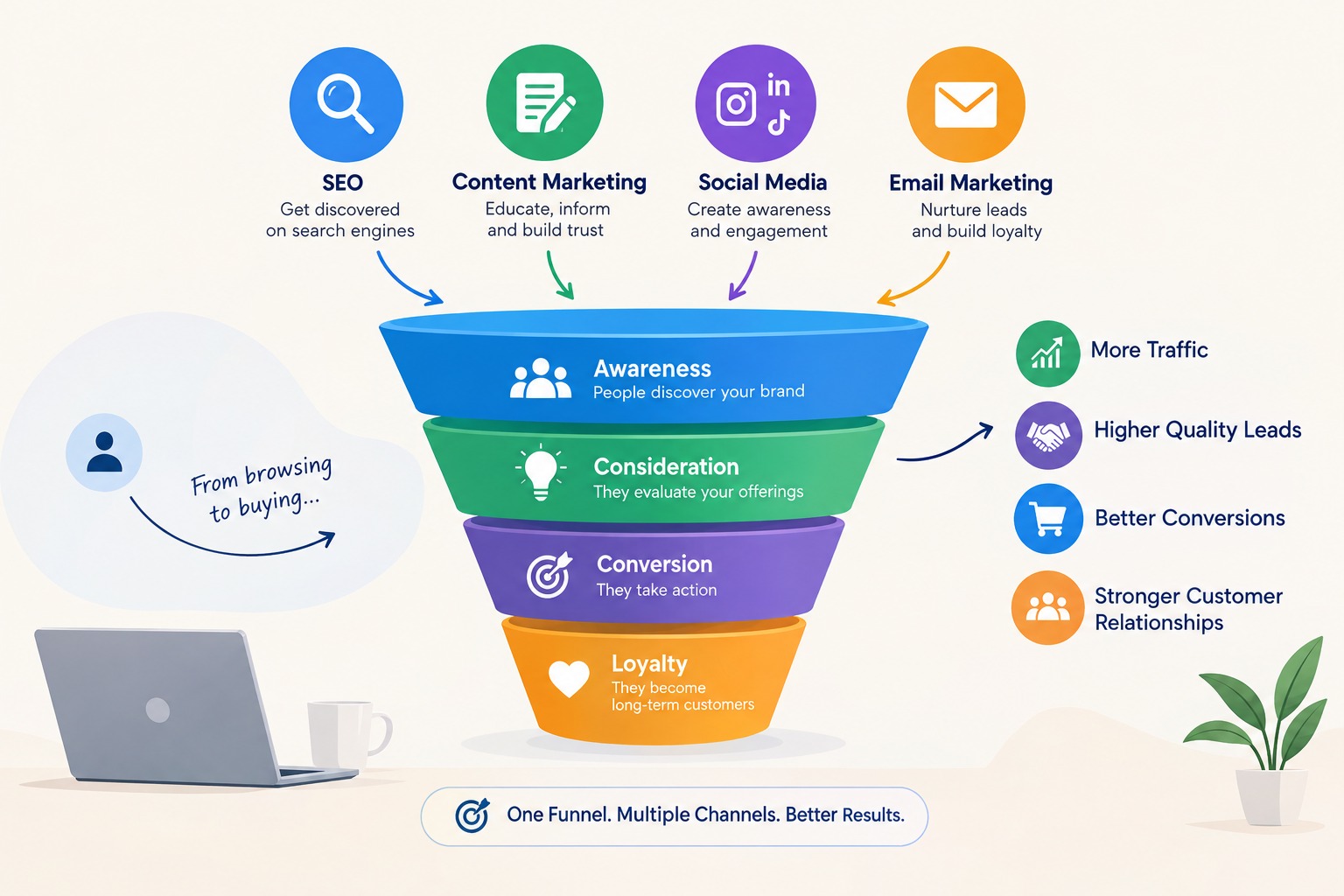
A modern marketing funnel represents the journey customers take as they discover a brand, evaluate its offerings, make a purchase, and develop a relationship with the business. Unlike traditional funnels, today's customer journeys are rarely linear, with people moving between search engines, social media, websites, and email before deciding to buy.
An integrated marketing funnel helps businesses:
Attract relevant audiences through multiple channels.
Build credibility through useful and consistent communication.
Generate qualified leads and improve conversion opportunities.
Strengthen customer relationships beyond the initial purchase.
Step-by-Step Guide to Building an Effective Marketing Funnel
1. Attract the Right Audience Through SEO
Search engine optimization helps businesses appear when potential customers search for relevant products, services, or information. Research relevant keywords, optimize important website pages, and create content that answers your audience's questions.
For example, a marketing agency can target searches such as “how to improve website conversions” through educational blog posts. The goal is to attract relevant visitors who are genuinely interested in the business's offerings.
2. Use Content Marketing to Build Trust
Content marketing provides valuable information through blogs, guides, case studies, and videos that help customers understand their problems and evaluate solutions. Instead of focusing only on promotions, create content that answers real questions and demonstrates expertise.
For example, a digital marketing agency could publish a guide explaining why websites receive traffic but generate few enquiries. Helpful content gives potential customers a reason to trust the brand and explore its services further.
3. Use Social Media to Create Awareness and Engagement
Social media helps businesses reach new audiences, distribute content, and build relationships with potential customers. Educational posts, short videos, customer testimonials, and industry insights can encourage engagement and introduce people to the brand.
Businesses should focus on relevant audiences and meaningful interactions rather than follower counts alone. Social media can also direct interested users towards website articles, service pages, and other useful resources.
4. Nurture Potential Customers Through Email Marketing
Not every visitor is ready to purchase immediately. Email marketing allows businesses to nurture subscribers who have opted in by sharing relevant resources, useful updates, and personalized recommendations.
A welcome email sequence, for example, can introduce the brand, provide educational content, and share a relevant case study. The objective is to build trust and help potential customers take the next step without overwhelming them with promotional messages.
5. Convert Interest Into Action
Once customers understand the brand's value, businesses should make it easy for them to enquire, book a consultation, or complete a purchase. Clear calls to action, relevant landing pages, simple forms, and transparent service information can reduce friction.
Businesses should also address common customer concerns through testimonials, case studies, and useful product or service details. A smooth website experience helps turn genuine interest into meaningful conversions.
6. Connect Every Channel Into One Strategy
SEO, content, social media, and email should work towards shared business objectives rather than operate as disconnected activities. For example, one detailed blog can attract search traffic, provide material for social media posts, and become a resource shared through email newsletters.
Each channel should communicate a consistent brand message while adapting content to its audience and purpose. This approach improves coordination and helps businesses create a connected customer experience.
7. Retain Customers and Encourage Repeat Engagement
The customer journey continues after a purchase. Businesses can use educational content, relevant email updates, and social media engagement to help customers receive ongoing value from their products or services.
Positive experiences can encourage repeat purchases, recommendations, and customer reviews. Treating retention as part of the marketing funnel helps businesses build lasting relationships rather than focusing exclusively on acquiring new customers.
8. Measure Marketing Funnel Performance
Track performance at every stage of the customer journey. Monitor organic traffic and search visibility during discovery, content engagement and subscriptions during consideration, and qualified enquiries and conversions during decision-making.
Tools such as Google Search Console, website analytics, email marketing platforms, and CRM systems can help businesses evaluate results. Reviewing these metrics together provides a clearer understanding of how different channels contribute to business goals.
The Data Behind Integrated Marketing
According to HubSpot's 2026 Multi-Channel Content Report, 94% of surveyed brands use three or more marketing channels. The report also identified website, blog, and SEO among the leading channels marketers reported as delivering return on investment.
Google's March 2025 retail insights reported that eight in ten online purchase journeys involve multiple touchpoints. These findings highlight why businesses should consider how customers interact with brands across different channels rather than evaluating every interaction independently.
Common Marketing Funnel Mistakes to Avoid
Treating SEO, social media, content, and email as separate activities.
Publishing content without understanding customer needs.
Measuring success only through impressions, clicks, or followers.
Sending repetitive promotional emails without providing value.
Ignoring customer retention after the initial purchase.
Expecting every marketing channel to generate immediate sales.
How Can You Measure Marketing Funnel Success?
Businesses should track organic traffic, audience engagement, qualified leads, email clicks, conversion rates, and customer retention. The most relevant metrics depend on the business model and the objective of each channel.
For example, SEO may contribute to discovery, while email helps nurture subscribers and encourage conversions. Evaluating these metrics together provides a more complete view of marketing performance.
Why Invest in an Integrated Digital Marketing Strategy?
An integrated strategy helps businesses coordinate SEO, content marketing, social media, and email around shared objectives. It creates opportunities to reach relevant audiences, build trust, nurture leads, and improve the customer experience.
Professional digital marketing support can help businesses identify opportunities, plan connected campaigns, and measure performance against their growth goals.
Conclusion
The modern marketing funnel is about connecting customer experiences rather than managing individual channels in isolation. SEO attracts relevant visitors, content builds understanding, social media encourages engagement, and email nurtures relationships that can lead to conversion and retention.
By aligning these activities and measuring meaningful outcomes, businesses can develop a more consistent marketing strategy and create stronger opportunities for sustainable growth.
Want to Build a More Effective Marketing Funnel?
BrandFuel helps businesses develop digital marketing strategies that connect SEO, content marketing, social media, and email with their growth objectives. Visit BrandFuel to explore our services and discuss your marketing goals.
Frequently Asked Questions
What is a modern marketing funnel?
A modern marketing funnel represents the journey customers take from discovering a brand to considering its offerings, making a purchase, and developing a lasting relationship with the business.
How do SEO and content marketing work together?
SEO helps audiences discover website pages through search engines, while content marketing provides useful information that answers questions and supports customer decisions.
Why is email marketing important in a marketing funnel?
Email marketing helps businesses nurture subscribers, share relevant resources, maintain relationships, and encourage conversions through useful and timely communication.
How do social media and SEO complement each other?
SEO helps businesses reach people actively searching for information, while social media introduces brands to relevant audiences and distributes useful content.
How can businesses measure marketing funnel performance?
Businesses can track organic traffic, engagement, qualified leads, email clicks, conversions, repeat purchases, and customer retention to assess performance across the customer journey.