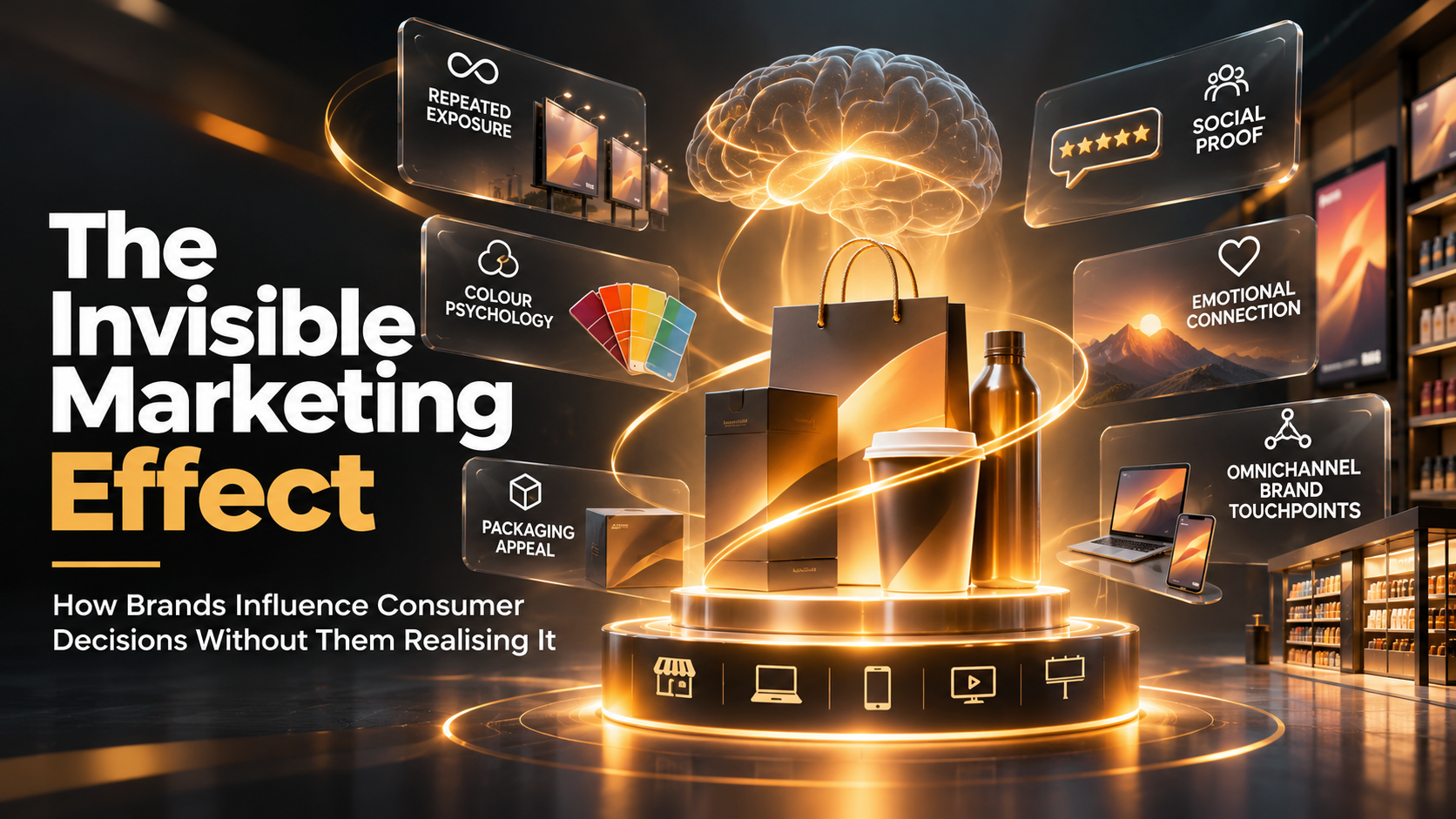
The Invisible Marketing Effect: How Brands Influence Consumer Decisions Without Them Realising It
What Is the Invisible Marketing Effect and Why Does It Matter?
The Invisible Marketing Effect refers to the subtle ways brands influence consumer perceptions, preferences, and purchasing decisions without relying on direct promotional communication. From familiar brand colours and packaging to customer reviews and repeated exposure, these elements can shape how people recognise, evaluate, and connect with businesses.
Unlike traditional advertising, which directly communicates product benefits, invisible marketing focuses on the smaller details that influence consumer behaviour over time. A customer may choose a particular brand because its packaging feels premium, its name is familiar, or they have repeatedly encountered it across different platforms.
Understanding this concept helps businesses:
Build stronger brand recognition through consistent visual identity.
Influence consumer perceptions through meaningful brand experiences.
Establish familiarity and credibility with potential customers.
Create emotional connections that encourage customer loyalty.
Differentiate their offerings in increasingly competitive markets.
How Does Invisible Marketing Influence Consumer Behaviour?
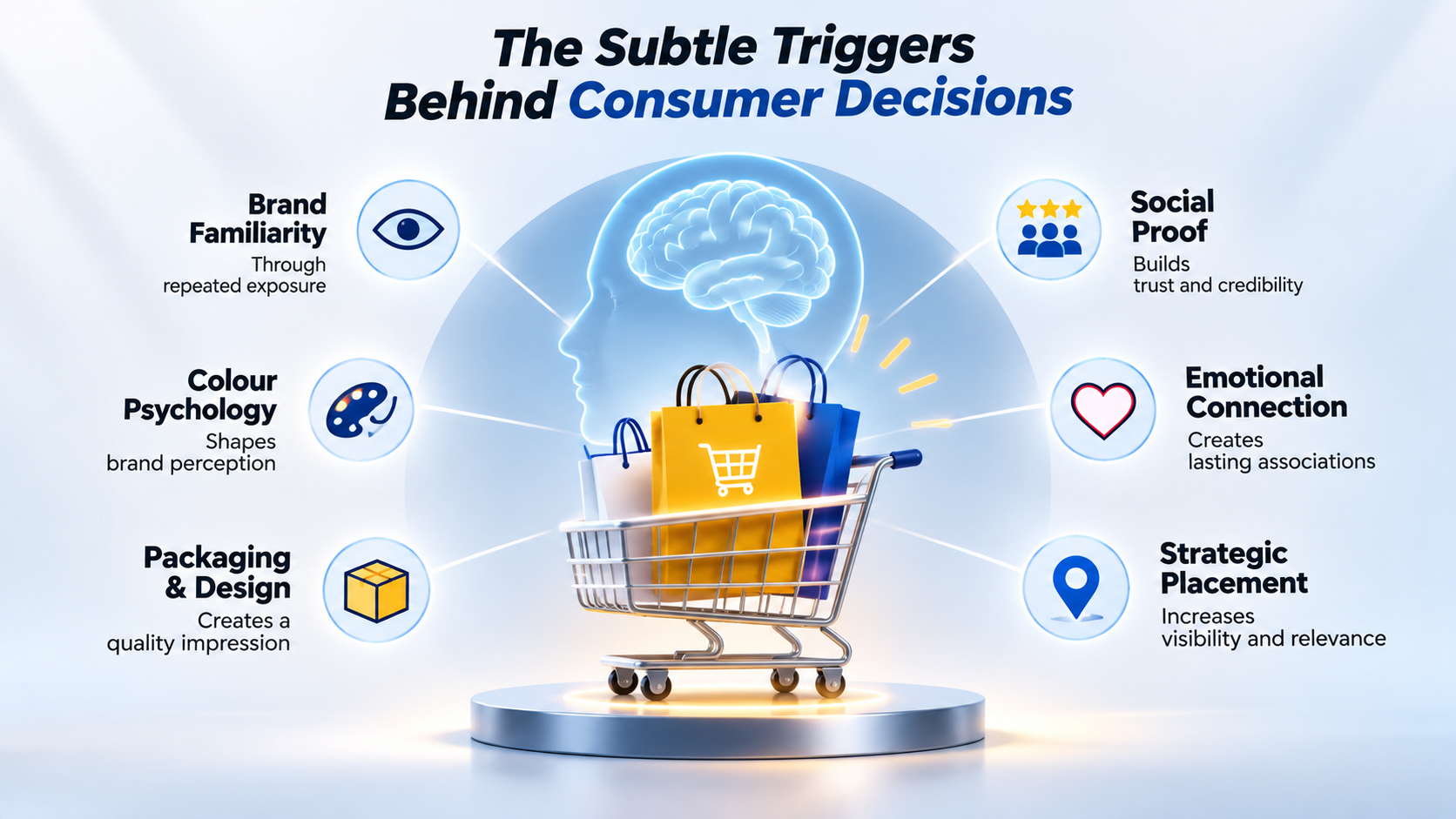
Consumer decisions are not always based on product features, pricing, or logical comparisons. Familiarity, emotions, visual associations, and social influence also play an important role. Brands use these psychological principles to create positive associations and make their offerings more recognisable.
1. Brand Familiarity and the Power of Repeated Exposure
Consumers often develop a preference for brands they recognise. The mere exposure effect, a psychological phenomenon, suggests that repeated exposure to something can increase familiarity and, under certain conditions, liking.
When people repeatedly encounter a brand through advertisements, social media, packaging, or everyday interactions, it gradually becomes more recognisable.
For example, a consumer who frequently sees a particular beverage brand across advertisements and retail stores may find it easier to recall when choosing a drink. This familiarity can influence consideration even when the consumer is not consciously thinking about the brand's marketing.
2. Colour Psychology and Visual Brand Perception
Colours influence how consumers interpret a brand's identity and personality. Businesses strategically use colour combinations to communicate particular associations and create a recognisable visual presence.
For example, blue is commonly associated with trust and reliability, while green is often connected with nature and sustainability. Black is frequently used to communicate sophistication and exclusivity.
However, colour associations can vary depending on cultural backgrounds, individual experiences, and context. Businesses should therefore select colours that align with their positioning and maintain consistency across their marketing channels.
3. Social Proof and the Influence of Customer Experiences
Consumers frequently consider the experiences of others before making purchasing decisions. Customer reviews, testimonials, ratings, recommendations, and user-generated content can influence how trustworthy a brand appears.
For example, when a potential customer sees positive reviews and genuine product experiences, they may feel more confident about considering that brand.
Social proof has become particularly important in digital marketing, where consumers can easily compare products, explore feedback, and evaluate businesses before making a purchase.
4. Emotional Associations and Brand Storytelling
Consumers often remember the emotions associated with a brand rather than every detail of its promotional communication.
Brands that connect their messaging with meaningful experiences, aspirations, celebrations, or everyday situations can develop stronger emotional associations with their audiences.
For example, a brand that consistently communicates around family moments may gradually become associated with togetherness and celebration.
Through storytelling and consistent communication, businesses can create connections that extend beyond the products or services they offer.
How Do Brands Influence Consumers Without Direct Advertising?
Some of the most effective marketing influences happen outside conventional advertising campaigns. Everyday brand interactions can shape consumer perceptions and purchasing preferences in subtle ways.
1. Packaging That Influences Product Perception
Packaging is often the first physical interaction a customer has with a product. Materials, typography, colours, and overall presentation can influence how consumers perceive its quality and value.
A thoughtfully designed package can create a premium impression and help a product stand out on crowded retail shelves. This makes packaging an important part of brand communication rather than simply a functional element.
2. Strategic Brand and Product Placement
The placement of products in physical stores, websites, and digital marketplaces can influence what consumers notice and consider purchasing.
Products displayed prominently are more likely to attract attention than those placed in less visible positions. Similarly, brands appearing in relevant digital environments or alongside familiar products can benefit from contextual associations.
Strategic placement helps businesses increase product visibility and create more opportunities for consumer engagement.
3. Consistency Across Brand Touchpoints
A brand's website, social media profiles, advertisements, packaging, and customer interactions collectively shape its identity.
When these touchpoints communicate consistent visual elements, messaging, and brand values, consumers develop a clearer understanding of what the business represents.
Consistent communication also strengthens brand recognition and helps businesses create a more reliable customer experience.
4. Customer Experience as a Marketing Tool
Every interaction a customer has with a business contributes to their perception of the brand. Website navigation, product presentation, customer support, delivery experiences, and after-sales communication can all influence customer satisfaction.
For example, a smooth online shopping experience and responsive customer support can create a positive impression that encourages customers to return.
Marketing therefore extends beyond advertisements and includes the complete experience a business delivers.
Real-World Examples of Invisible Marketing
Several globally recognised brands demonstrate how subtle marketing techniques contribute to consumer recognition and brand perception.
Coca-Cola: The Power of Brand Familiarity
Coca-Cola has developed a highly recognisable identity through its distinctive red colour, typography, packaging, and consistent communication. These familiar visual elements help consumers identify the brand quickly, even without seeing a complete advertisement.
Apple: Creating a Premium Brand Experience
Apple uses minimalist product design, distinctive packaging, and carefully maintained retail environments to reinforce its brand identity. Its consistent presentation contributes to associations with simplicity, innovation, and premium quality.
Starbucks: Building Associations Beyond the Product
Starbucks has established a recognisable customer experience through its store environments, personalised interactions, product presentation, and visual identity. These experiences contribute to how consumers perceive the brand beyond the coffee itself.
These examples demonstrate that brand influence is not limited to direct promotional messages. The overall experience, familiarity, and associations surrounding a business can also shape consumer preferences.
The Role of Invisible Marketing in Modern Business
In an increasingly competitive marketplace, consumers encounter advertisements and promotional messages across multiple platforms every day. As a result, businesses need to consider more than advertising frequency to create meaningful brand differentiation.
Invisible marketing allows businesses to focus on the smaller details that influence how customers recognise, remember, and experience their brands.
Its importance can be understood through four key benefits:
Stronger Brand Recall: Consistent visual identity and repeated exposure make brands easier to recognise and remember.
Improved Consumer Trust: Familiarity, positive customer experiences, and credible social proof can help reduce hesitation during purchasing decisions.
Better Brand Differentiation: Distinctive packaging, storytelling, and brand personality help businesses stand apart in competitive markets.
Long-Term Customer Relationships: Positive emotional associations and consistent experiences can encourage stronger connections between consumers and brands.
How Can Businesses Apply Invisible Marketing Strategies?
Understanding consumer psychology is only the first step. Businesses must translate these insights into practical marketing strategies that create meaningful and consistent customer experiences.
Here are some ways businesses can incorporate invisible marketing into their overall marketing approach:
Develop a Consistent Visual Identity: Maintain recognisable colours, typography, design elements, and messaging across all marketing platforms.
Create Meaningful Brand Experiences: Ensure that every customer interaction reflects the business's values and brand positioning.
Use Authentic Social Proof: Highlight genuine customer reviews, experiences, and testimonials to strengthen credibility.
Invest in Emotional Storytelling: Develop brand communication that connects with customer interests, aspirations, and everyday experiences.
Improve Customer Experience: Make every interaction, from discovering a product to receiving after-sales support, simple and memorable.
Maintain Consistent Brand Communication: Ensure that the brand's personality and positioning remain recognisable across different marketing channels.
The objective is not to manipulate consumer behaviour but to create positive brand experiences that naturally influence how people perceive and connect with a business.
Common Invisible Marketing Mistakes Businesses Should Avoid
Although subtle marketing techniques can strengthen brand perception, inconsistent execution can reduce their effectiveness. Businesses should avoid:
Using inconsistent colours, typography, and messaging across platforms.
Prioritising attractive packaging without considering product quality.
Relying on repetitive exposure without providing meaningful value.
Using misleading testimonials or inauthentic social proof.
Creating emotional campaigns that do not align with the brand's actual values.
Ignoring customer experience after the initial purchase.
Successful invisible marketing requires consistency, authenticity, and a clear understanding of the target audience.
How Can Businesses Measure the Impact of Invisible Marketing?
Unlike direct advertising campaigns, invisible marketing does not always produce immediate or easily measurable results. Its influence can be evaluated through a combination of brand and customer behaviour metrics.
Businesses can monitor:
Brand Awareness: How familiar target audiences are with the business.
Brand Recall: Whether consumers can remember the brand without being prompted.
Customer Sentiment: How people perceive and discuss the brand.
Repeat Purchase Rate: Whether customers return to purchase again.
Customer Retention: How effectively the business maintains long-term customer relationships.
Customer Reviews and Recommendations: Whether positive experiences encourage customers to recommend the brand.
Tools such as website analytics, customer surveys, social listening platforms, CRM systems, and review monitoring tools can help businesses understand how their brand is perceived over time.
Why Invest in a Strong Brand Marketing Strategy?
Building a recognisable brand requires more than running advertisements or publishing regular social media content. Businesses must create consistent experiences that communicate their identity, values, and positioning across every customer touchpoint.
A well-planned brand marketing strategy helps businesses strengthen recognition, establish credibility, communicate their value, and build meaningful relationships with their audiences.
Professional marketing support can help businesses identify opportunities, develop distinctive brand positioning, and create integrated strategies that support long-term growth.
Conclusion
The Invisible Marketing Effect highlights an important aspect of modern marketing: not every influence needs to be directly communicated to be effective. Familiar brand colours, recognisable packaging, positive customer experiences, and consistent messaging can all contribute to the way consumers perceive and choose businesses.
In a marketplace where audiences are constantly exposed to promotional content, brands must focus on creating impressions that extend beyond individual advertisements.
By understanding consumer psychology and paying attention to everyday brand interactions, businesses can build stronger recognition, develop meaningful customer connections, and create lasting brand value.
Ultimately, effective marketing is not just about what consumers see. It is also about what they remember, feel, and associate with a brand.
Want to Build a Stronger and More Recognisable Brand?
BrandFuel helps businesses develop strategic marketing approaches that strengthen brand identity, improve audience engagement, and create meaningful customer experiences. Visit BrandFuel to explore our services and discover how a well-planned marketing strategy can support your business growth.
Frequently Asked Questions
What is the Invisible Marketing Effect?
The Invisible Marketing Effect refers to the subtle ways brands influence consumer perceptions and purchasing decisions through familiarity, visual identity, emotional associations, social proof, and customer experiences.
How does invisible marketing influence consumer behaviour?
Invisible marketing influences consumer behaviour through psychological factors such as repeated exposure, brand familiarity, colour associations, emotional connections, and social proof. These factors can shape consumer preferences and purchasing decisions.
What is the role of colour psychology in marketing?
Colour psychology helps businesses communicate brand personality and create visual associations. Different colours can influence how consumers interpret a brand, although their effects depend on cultural context and individual experiences.
How does brand familiarity affect purchasing decisions?
Repeated exposure can make a brand more recognisable and easier to recall. Familiarity may also contribute to positive brand associations, making consumers more likely to consider the brand when making purchasing decisions.
Why is social proof important in marketing?
Social proof helps businesses establish credibility through customer reviews, testimonials, ratings, and recommendations. Positive experiences shared by others can influence consumer confidence and purchasing consideration.
How can businesses implement invisible marketing?
Businesses can implement invisible marketing through consistent visual branding, authentic storytelling, positive customer experiences, strategic product presentation, and genuine customer testimonials.
Is invisible marketing the same as traditional advertising?
No. Traditional advertising generally communicates promotional messages directly, while invisible marketing focuses on subtle brand interactions and psychological influences that shape consumer perceptions over time.